
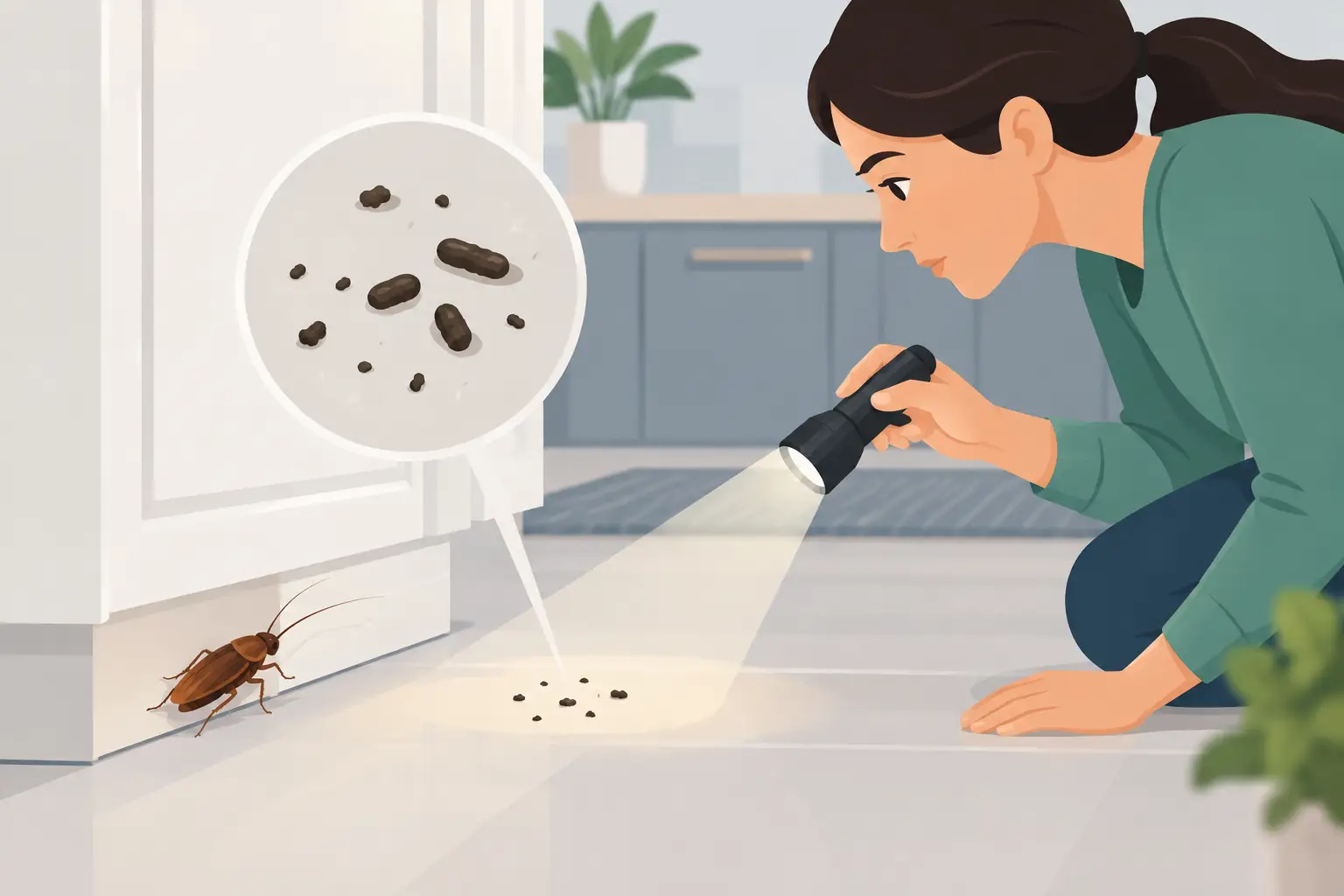
A few dark specks behind the refrigerator can be easy to dismiss as spilled coffee grounds, dirt, or old food crumbs. But knowing how to identify cockroach droppings can help you catch a roach problem before it becomes a larger concern for your home, tenants, customers, or family.
Cockroaches are skilled at staying out of sight. Their droppings are often one of the first visible signs that they are feeding, nesting, or moving through a property. The key is looking at the size, shape, location, and pattern of the material – not just one suspicious speck.
What Cockroach Droppings Look Like
Cockroach droppings vary by species and by the size of the roach. In Utah homes and businesses, smaller roaches commonly leave droppings that look similar to coarse black pepper, finely ground coffee, or dark grains of sand. You may also see tiny black or brown cylindrical specks with ridges along the sides.
Larger cockroaches leave more noticeable droppings. These are often dark brown or black, shaped like short cylinders, and may be about the size of a grain of rice. Their ends can appear blunt rather than pointed. Fresh droppings may look darker or slightly shiny, while older ones can become dull, dry, and easier to crumble.
A single mark is not always enough to confirm cockroach activity. Look for repeated evidence in sheltered areas, particularly where food, moisture, warmth, or clutter are present. Roaches tend to travel the same routes, so their droppings often appear in groups or along edges and corners.
Where to Look for Cockroach Evidence
Cockroaches prefer tight, protected spaces close to food and water. Start with the areas people rarely inspect during regular cleaning: behind and beneath appliances, inside lower kitchen cabinets, around plumbing openings, and under sinks.
In a home, check pantries, pet-food storage areas, laundry rooms, bathrooms, utility rooms, and basement storage. In apartments, condos, and multi-family buildings, roaches can move between units through wall voids, plumbing lines, shared utility spaces, and gaps around pipes. Finding droppings in one unit does not always mean the activity started there.
For restaurants, offices, retail spaces, and other commercial properties, examine break rooms, floor drains, mop closets, storage rooms, delivery areas, and spaces behind equipment. A small amount of evidence near a water source can signal activity that needs attention, especially when several people use the facility or food is stored on-site.
How to Identify Cockroach Droppings vs. Other Pest Signs
Droppings can resemble evidence left by other pests, and the differences matter. Treating the wrong pest wastes time and may allow the actual issue to grow.
Cockroach Droppings vs. Mouse Droppings
Mouse droppings are generally larger than those from small roaches. They are shaped like small grains of rice with pointed ends, while larger cockroach droppings tend to have blunt ends and may show subtle ridges. Mouse droppings are also more likely to appear along baseboards, inside drawers, in garages, or near stored materials.
If the dark material is pepper-like and concentrated behind appliances or inside cabinet hinges, cockroaches are more likely. If you find distinct, pointed pellets along travel paths or in nesting materials, rodents are a stronger possibility.
Cockroach Droppings vs. Termite Frass
Drywood termite frass is usually lighter in color than cockroach waste. It can be tan, brown, or wood-colored, and the pellets are uniform in shape. Termites often push frass from small exit holes, creating a neat pile below a wall, beam, or wooden feature.
Cockroach droppings are darker, less consistent, and commonly found near food, grease, moisture, and hiding places. They are not usually piled directly below a small hole in wood.
Cockroach Droppings vs. Bed Bug Evidence
Bed bug droppings are typically tiny black stains rather than loose pellets. They may look like ink dots or small smears on mattresses, box springs, headboards, upholstered furniture, or bedding. Cockroach evidence is more often loose, grainy material in kitchens, bathrooms, and utility areas.
Other Signs That Support a Cockroach Diagnosis
Droppings are more convincing when they appear with other signs of activity. You may notice a musty, oily odor in a heavily affected area, especially inside a cabinet or behind an appliance. Roaches can also leave shed skins as they grow, along with brown capsule-shaped egg cases called oothecae.
Live roaches seen at night are a clear sign, but daytime sightings deserve attention too. Cockroaches are usually nocturnal. When they are moving around during the day, it can mean their hiding spaces are crowded or the population is becoming more established.
Smear marks can also appear along walls, cabinet corners, and travel routes. These dark streaks are more common where roaches move through damp or humid areas. None of these signs alone determines the full size of an infestation, but together they provide a much clearer picture.
What to Do After You Find Suspected Droppings
First, avoid sweeping or dry dusting the material. Disturbing droppings can send particles into the air. Wear disposable gloves, use a damp paper towel or disinfecting wipe to pick up the evidence, and place the waste in a sealed bag before discarding it. Clean the surrounding surface with an appropriate household disinfectant, then wash your hands.
Take a clear photo before cleaning if possible. A photo, along with notes about the location and frequency of the evidence, can help a pest professional identify the likely pest and determine where an inspection should begin.
Next, reduce what is attracting or supporting roach activity. Store food in sealed containers, clean crumbs and grease from kitchen surfaces, empty trash regularly, and avoid leaving pet food out overnight. Repair leaks and reduce standing water under sinks, around appliances, and in utility areas. Caulk obvious gaps around pipes, cabinets, and wall openings when practical.
These steps help, but they may not solve an established infestation on their own. Cockroaches can hide deep in wall voids, under flooring, behind appliances, and within shared building spaces. In multi-family properties, a unit-by-unit approach can fail if adjacent units and common areas are not considered.
When to Call a Professional
Call for a professional inspection when you find repeated droppings, see live roaches, notice egg cases, or keep finding evidence after cleaning. Prompt service is especially worthwhile in homes with young children, older adults, pets, food-preparation areas, or anyone with sensitivities that can be aggravated by pest allergens.
Property managers and landlords should act quickly when tenants report roach evidence. Fast, documented action protects resident comfort and helps prevent a small issue from spreading through connected units. The right treatment plan depends on the building layout, the degree of activity, sanitation conditions, and likely entry points.
Pest Xperts provides property-specific cockroach control for homes, multi-family communities, and businesses throughout Northern and Central Utah. A professional assessment can separate cockroach evidence from look-alike pest signs and focus treatment where it will do the most good.
If you are unsure about the specks you found, keep the area clean, document the location, and do not wait for the evidence to multiply. Early attention gives you more options and helps keep your property comfortable, clean, and protected.
continue reading
Related Posts

Use this commercial sanitation pest guide to reduce pest pressure, protect tenants and customers, and build a cleaner, safer Utah property year-round.
Who handles tenant pests? Learn when a Utah landlord, tenant, or property manager is responsible and how fast action prevents a larger infestation problem.

Follow this pest treatment timeline guide to know what happens before, during, and after service, and when your Utah home or business should improve fully.