
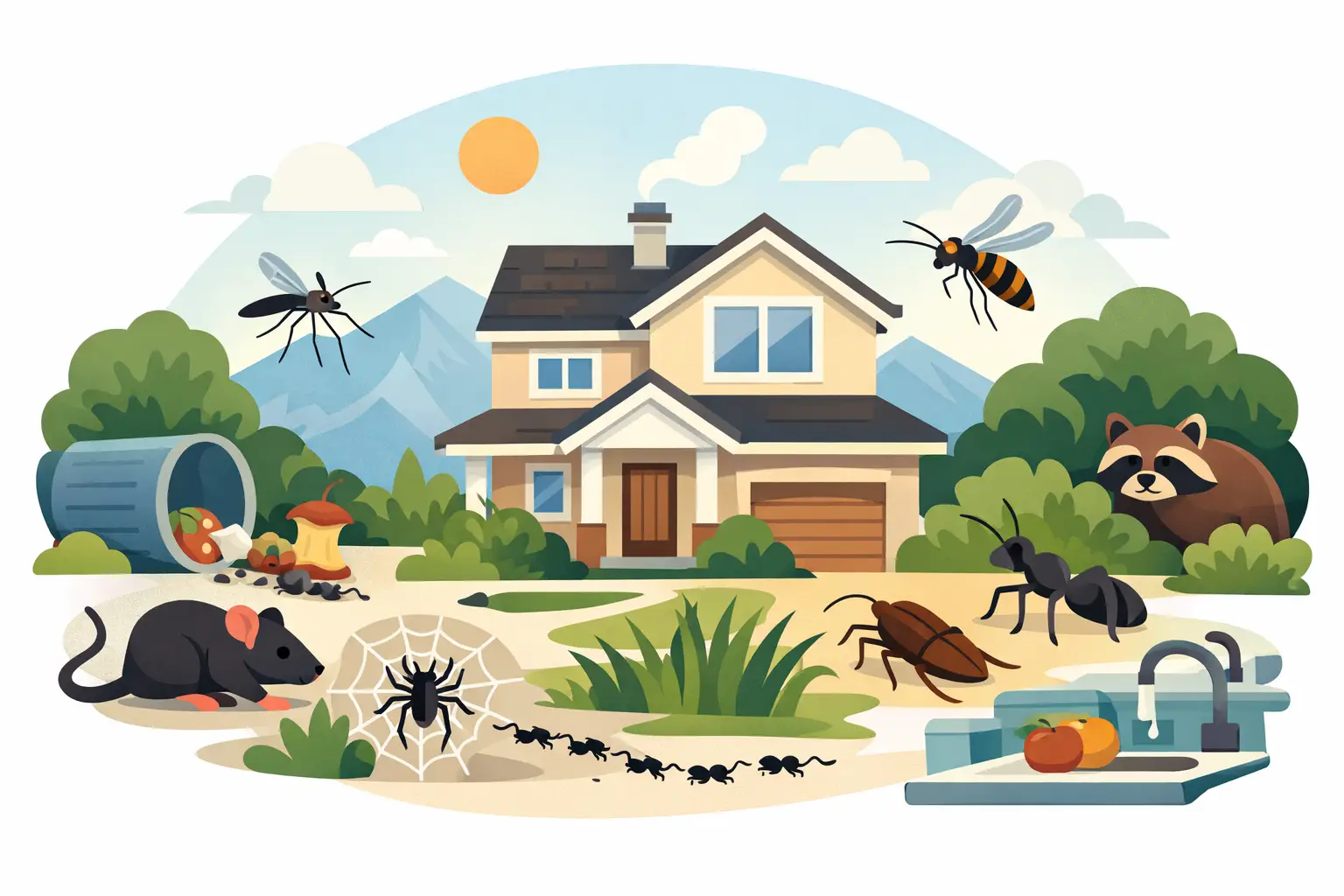
A few ants near the kitchen sink can become a trail by dinner. A mouse in the garage may be quiet for weeks before it finds its way into the pantry. That is the reality of common pests in Utah homes: many begin as a small, seasonal inconvenience, then grow into a problem that affects comfort, cleanliness, and sometimes the condition of the property.
Utah’s dry climate, cold winters, warm summers, and fast-growing neighborhoods create ideal opportunities for different pests throughout the year. Knowing what you are seeing, why it is there, and when to act can help protect your home before a small issue becomes an infestation.
Why Utah Homes Attract Pests
Pests are looking for the same basics people rely on: shelter, food, water, and a protected place to reproduce. During hot, dry stretches, irrigation, pet water bowls, plumbing leaks, and cool indoor spaces draw insects and rodents closer. When temperatures fall, attics, wall voids, garages, basements, and crawl spaces offer welcome shelter.
New construction and changing landscapes can also shift pest activity. Disturbed soil may send ants, spiders, and rodents toward nearby structures. Homes near open fields, canals, foothills, agricultural areas, or undeveloped lots can experience more pressure, but even a well-kept home in a dense neighborhood can have pest problems. A small crack around a utility line or a gap beneath a garage door is often all it takes.
The Most Common Pests in Utah Homes
Ants
Ants are among the most frequent calls during spring and summer. Pavement ants, odorous house ants, and carpenter ants may enter through foundation cracks, window gaps, and openings around pipes. They are often drawn to crumbs, sticky spills, pet food, and moisture near sinks or bathrooms.
Most ants are more frustrating than dangerous, but carpenter ants deserve closer attention. They do not eat wood like termites, yet they can excavate damp or damaged wood to build nesting galleries. Seeing large black ants indoors, especially repeatedly or near a moisture issue, is a reason to investigate rather than simply spray the visible trail.
Store food in sealed containers, wipe counters regularly, and address dripping fixtures. These steps reduce attraction, but they may not reach a nest located outdoors, inside a wall, or beneath a slab. Effective ant control usually requires identifying where the colony is nesting and treating the source.
Spiders
Utah homeowners commonly see house spiders, wolf spiders, cellar spiders, and occasional black widows. Most spiders help reduce other insect populations and prefer to stay out of sight. Still, repeated spider activity can indicate that the home is providing plenty of prey insects and protected hiding places.
Black widows are the spider homeowners should take most seriously. They favor dark, undisturbed spaces such as window wells, sheds, garages, crawl spaces, woodpiles, and outdoor furniture. Their markings can vary, but the familiar red hourglass on the underside of the abdomen is a key identifier. Avoid reaching blindly into storage areas, and use gloves when moving boxes, firewood, or equipment that has been sitting outside.
Regularly removing webs around entries and reducing clutter can help. If spiders are appearing frequently indoors, a broader pest prevention plan can reduce the insects that attract them in the first place.
Cockroaches
Cockroaches are a pest that deserves quick attention. They can move through wall voids, plumbing penetrations, shared utility spaces, and deliveries, which makes them especially challenging in apartments, townhomes, and multi-family properties. German cockroaches are particularly persistent because they reproduce quickly and thrive near warmth, food, and moisture.
Roaches may be active at night, so homeowners often notice warning signs before seeing one in daylight. Small dark droppings, shed skins, egg cases, a musty odor, or activity behind appliances can point to an established issue. Daytime sightings can mean the population is large or that the insects have been disturbed.
Good sanitation matters, but cleanliness alone does not always solve a cockroach infestation. In multi-family buildings, neighboring units and common plumbing lines can allow activity to spread. Property-wide communication, inspection, and coordinated treatment are often necessary for dependable control.
Mice and Other Rodents
Mice often become more noticeable in fall and winter, although they can enter homes at any time. They squeeze through surprisingly small gaps around foundations, vents, pipes, siding, and garage doors. Once inside, they may nest in insulation, storage boxes, closets, attics, and behind appliances.
Beyond the discomfort of hearing scratching in a wall, rodents can contaminate food, leave droppings, chew stored belongings, and damage wiring. A single mouse sighting should not be ignored, particularly if you find droppings in drawers, cupboards, or the garage.
Sealing entry points is one of the strongest long-term defenses, but timing matters. Closing a gap without addressing active rodents can leave them trapped inside. A professional assessment can identify travel routes, nesting areas, and structural access points so removal and exclusion work together.
Wasps, Hornets, and Yellowjackets
Stinging insects become a major concern in late spring and summer. Paper wasps may build exposed nests under eaves, deck railings, and patio covers. Yellowjackets can nest in wall voids, ground burrows, or structural gaps, making them harder to locate and riskier to disturb.
A nest near a doorway, play area, mailbox, or outdoor dining space is more than a nuisance. Stings can be painful, and they may cause serious reactions for people with allergies. Do not seal an active nest inside a wall or spray it without a clear plan for where the insects will go. Disturbing a colony can send defensive insects into the home or toward anyone nearby.
Boxelder Bugs, Earwigs, and Other Occasional Invaders
Some Utah pests are primarily seasonal invaders. Boxelder bugs gather on sunny exterior walls in fall and may slip indoors through small gaps as they seek overwintering sites. They do not typically damage a home, but large numbers can be unpleasant and leave stains when crushed.
Earwigs favor damp areas, mulch, leaf piles, and spaces near foundations. They may enter basements and bathrooms during dry weather or after heavy watering. Although their appearance is alarming, earwigs are not dangerous to people. Their presence often points to excess moisture or dense landscaping against the home.
These pests respond well to practical prevention: keep mulch and stored materials away from the foundation, repair torn screens, seal gaps around windows and doors, and avoid overwatering near exterior walls.
When a Pest Problem Needs Professional Help
Some pest issues are appropriate for simple prevention and monitoring. One outdoor spider web or a few boxelder bugs near a window may not require treatment. The situation changes when activity is repeated, pests are appearing in several rooms, droppings are present, or the issue involves cockroaches, rodents, stinging insects, or black widows.
It is also wise to call for help when do-it-yourself products produce only short-term results. Visible insects are often a small part of the problem. The nest, harborage area, entry point, or food source may remain untouched. Applying more product without identifying the source can expose family members and pets to unnecessary chemicals while doing little to resolve the infestation.
For landlords, property managers, and multi-family operators, early action protects more than one unit. Pest activity can affect tenant comfort, maintenance schedules, inspections, occupancy, and the reputation of the property. A treatment plan should account for the building layout, shared walls, sanitation conditions, exterior pressure, and the scale of the property.
Practical Prevention for Every Season
No home can be made completely inaccessible to pests, but consistent maintenance makes a major difference. Keep food sealed, clean up spills, and avoid leaving pet food out overnight. Repair leaks and reduce standing water near the home. Check weatherstripping, door sweeps, screens, vents, and openings around utility lines.
Outdoors, trim branches away from the roofline and avoid stacking firewood directly against the house. Keep garbage containers closed, clear clutter from garages and sheds, and look for pest activity around window wells, decks, and foundation edges. These habits reduce hiding places while making early warning signs easier to spot.
Pest pressure changes with the season, so prevention should not be a one-time task. A spring inspection may focus on ants and spiders, while fall attention often turns to rodents and overwintering insects. Homes with prior infestations, nearby construction, or frequent pest activity may benefit from ongoing service rather than waiting for the next issue.
When pests start taking over your space, a property-specific inspection gives you a clearer path forward. Pest Xperts can assess the activity, the home or building layout, and the conditions attracting pests, then recommend a treatment plan designed to protect the people who live or work there.
continue reading
Related Posts

Bedbug treatment works best with inspection, targeted control, and follow-up visits. Learn what to do now to protect your Utah home or property today.
-
Learn which common pests in Utah homes cause trouble through every season, what attracts them, and when professional treatment is the safest next step.

Spider control services Utah homeowners can rely on for safer homes, fewer webs, and property-specific prevention across the Wasatch Front and beyond.