
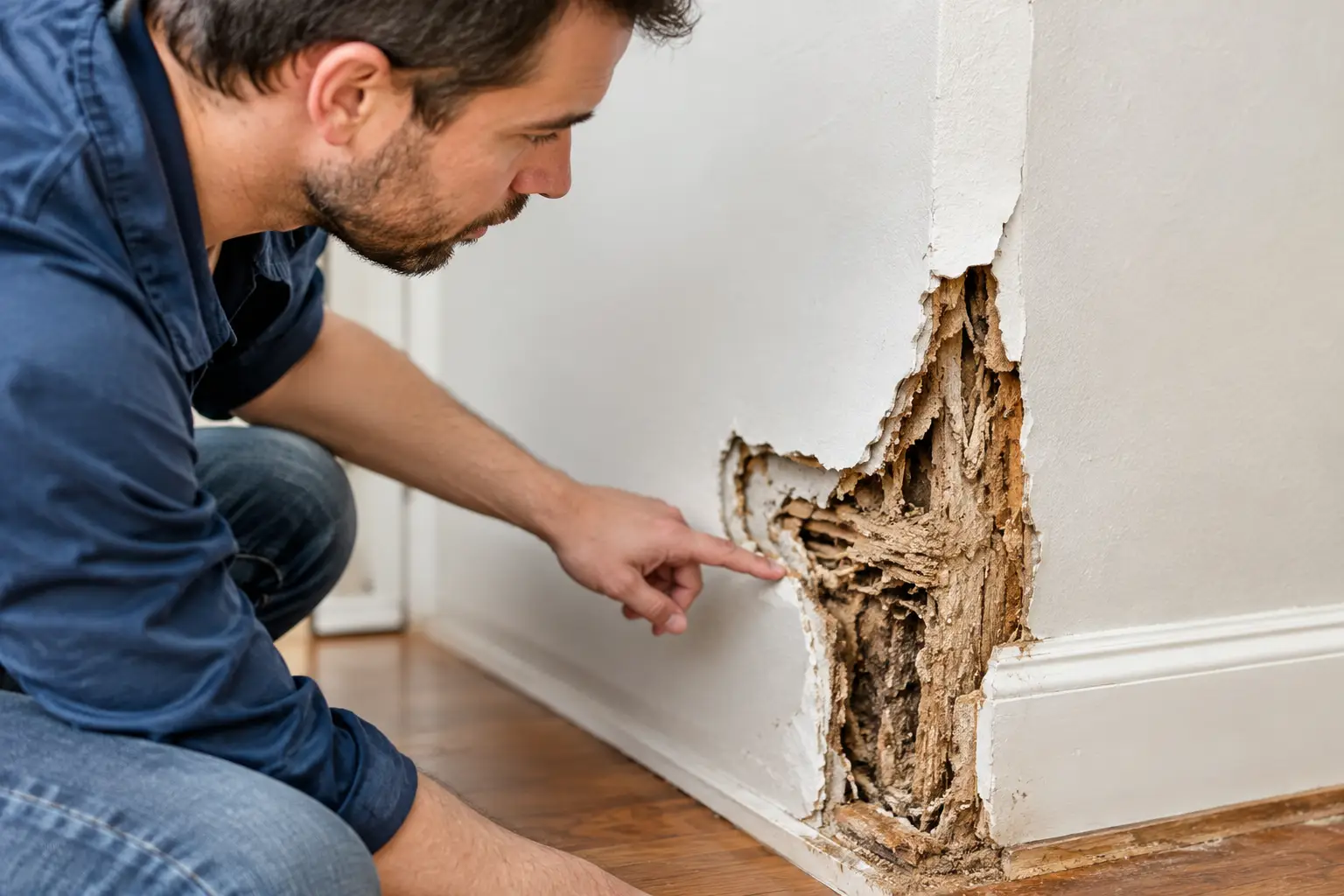
A door that suddenly sticks or a baseboard that sounds hollow may seem like a small home-maintenance issue. In some cases, though, these are termite damage signs worth taking seriously. Termites work from the inside out, often causing structural damage long before there is an obvious hole, pile of debris, or visible insect.
For Utah homeowners, landlords, and property managers, early action matters. A prompt inspection can clarify whether termites are present, where moisture or soil contact may be contributing to the issue, and what treatment or repair steps make sense for the property.
Why termite damage can be hard to spot
Subterranean termites, the type most often associated with property damage in Utah, need moisture to survive. They typically travel from the soil into wood through protected pathways, feeding behind drywall, beneath flooring, inside framing, and around foundations. That hidden behavior is why a house can look perfectly maintained while activity develops out of sight.
Termites do not usually leave one dramatic clue. Instead, homeowners may notice several subtle changes around lower-level walls, utility entry points, crawl spaces, porches, or attached structures. A professional inspection is especially worthwhile when more than one sign appears or when a home has a history of moisture problems.
9 termite damage signs to watch for
1. Mud tubes on foundation walls or supports
Pencil-width mud tubes are one of the clearest signs of subterranean termite activity. These tunnels may run up concrete foundation walls, along crawl-space piers, near expansion joints, or around pipes and utility lines. They help termites move between the ground and a food source without drying out.
Do not assume an old-looking tube means the problem is gone. A tube can be abandoned, but only an inspection can determine whether activity is current and whether additional hidden routes exist. Avoid knocking down every tube before an inspection, since intact evidence can help identify the source and scope of activity.
2. Wood that sounds hollow or feels thin
Termites consume wood from the inside, often leaving a thin outer surface intact. A damaged baseboard, door frame, beam, or trim piece may sound hollow when tapped or give slightly when pressed. In more advanced cases, wood can feel brittle or break apart with very little pressure.
Hollow wood is not automatically termite damage. Water damage, wood rot, and carpenter ants can create similar symptoms. The difference matters because the treatment and necessary repairs are not the same.
3. Blistered paint or bubbling drywall
Paint that bubbles, peels, or looks water-damaged can point to a plumbing leak or condensation issue. It can also appear when termites damage material beneath the surface or introduce moisture along their travel path.
Pay close attention when bubbling paint appears near baseboards, window frames, exterior doors, or lower-level walls without a clear explanation. If the affected area is soft, sounds hollow, or appears alongside mud tubes, schedule a termite inspection rather than simply repainting it.
4. Doors and windows that suddenly stick
A sticking door is often blamed on Utah’s changing temperatures or normal settling, and sometimes that is correct. But termite feeding and moisture-related damage around frames can distort wood enough to make doors and windows harder to open or close.
The concern rises when the issue develops quickly, affects a ground-floor opening, or comes with cracking trim, sagging material, or soft wood around the frame. A technician can assess whether the problem is structural, moisture-related, or caused by a pest.
5. Damaged or sagging floors
Termites can damage subflooring and supports beneath carpet, vinyl, laminate, or hardwood. A floor may feel unusually soft, uneven, springy, or weak in a localized area. In serious cases, tiles loosen, flooring separates, or a section begins to sag.
Floor damage deserves prompt attention regardless of the cause. Do not keep testing a weak spot by walking on it, especially in a rental property or commercial space where safety is a concern. Restrict access if needed and arrange for an assessment.
6. Small holes, tunnels, or maze-like patterns in wood
When termite-damaged wood is exposed, it may contain galleries that follow the grain and look like layered tunnels. The surfaces can appear scraped out or uneven beneath a thin outer layer. Small exit holes may be present, but they are not always visible with subterranean termites.
Fresh-looking wood damage should not be ignored just because you do not see live insects. Termites avoid light and may retreat quickly when a damaged board is opened.
7. Swarmers or discarded wings indoors
Termite swarmers are reproductive termites that emerge to establish new colonies. Seeing winged insects indoors, particularly in spring or after moisture conditions change, is a reason to investigate. Discarded wings near windowsills, doors, light fixtures, or vents can be just as telling.
Flying ants are commonly mistaken for termite swarmers. Termites have straight antennae, a broad waist, and wings that are similar in size. Ants have bent antennae, a pinched waist, and front wings that are longer than their rear wings. If you can safely collect a sample or take a clear photo, it may help with identification.
8. Frass or pellet-like debris in one area
Small, sand-like pellets can be associated with drywood termites, which push waste from their galleries. This is less typical of the subterranean termite activity commonly encountered in Utah, but unexplained pellet-like debris still deserves attention. It could also be sawdust from carpenter ants, wood-boring insects, or ordinary debris from a damaged material.
Rather than sweeping it away immediately, note where it appeared and whether it returns. A pest professional can identify the material and look for the source.
9. Moisture problems near wood and soil contact
Moisture does not prove termites are present, but it creates conditions that make a property more vulnerable. Leaking spigots, poor drainage, clogged gutters, damp crawl spaces, and wood siding or mulch touching the soil can make termite access easier.
This is one of the most useful signs because it gives property owners something practical to correct. Repair leaks, direct water away from the foundation, keep soil and mulch below siding, and avoid storing firewood against the home. These changes support prevention, but they do not replace an inspection if other warning signs are already present.
What to do if you see possible termite damage
Start by documenting what you found. Take photos of mud tubes, damaged wood, wings, or affected flooring, and make a note of the location and date. Avoid spraying household insecticide into suspected termite areas. Surface sprays rarely reach the colony, can scatter visible activity, and may make an evaluation less clear.
Next, arrange a professional termite inspection. An experienced technician should examine accessible foundations, crawl spaces, exterior wood, utility penetrations, garages, porches, and areas where moisture or soil contact creates risk. The inspection should separate active termite evidence from old damage, rot, carpenter ant activity, and other look-alike issues.
Treatment depends on the construction of the property, the location of activity, and the extent of the infestation. A targeted plan may include treating soil around the structure, addressing entry points, and recommending repairs or moisture corrections. For multi-family properties, the assessment may need to consider connected units, shared utility spaces, landscaping, and tenant access.
When an inspection should not wait
Call promptly if you find active mud tubes, termite swarmers indoors, soft flooring, structural-looking wood damage, or multiple signs in the same area. The same applies if a tenant reports insects, damaged trim, or a floor that feels unsafe. Waiting may allow the colony to continue feeding where you cannot see it.
For homeowners and property managers along the Wasatch Front, Pest Xperts can provide a property-specific assessment and treatment recommendation based on the building’s conditions and the evidence present. A clear diagnosis protects your budget as well as your property, because it helps avoid treating the wrong pest or repairing damage without addressing its cause.
A small change around a door frame or foundation may turn out to be routine maintenance. But when the cause is uncertain, getting a trained set of eyes on it is a practical way to protect the home, the people inside it, and the investment you have worked hard to maintain.
continue reading
Related Posts
Learn how to remove wasps safely, recognize high-risk nests, and prevent repeat activity around your Utah home, rental property, or business quickly.

Professional versus store pesticides differ in more than strength. Learn when DIY products help and when expert pest treatment better protects Utah homes.

Rodent cleanup means more than sweeping droppings. Learn safe cleanup steps, ways to prevent repeat activity, and when to call a Utah pest pro for help.